Record the water pattern
Photograph the site during and after several storms, then note how long water remains. Check where roof and pavement runoff enters, whether the soil drains between events and whether the low area connects to a swale, street or shoreline.
Do not treat freshwater wetness and saltwater flooding as equivalent. A tree described as tolerant of moist or periodically wet soil may still be a poor choice where storm surge, brackish water or chronic root-zone saturation is the real pressure.
- Duration: minutes, hours or multiple days
- Frequency: rare storm, summer pattern or year-round
- Water source: roof, pavement, irrigation, groundwater or coastal flooding
- Space: mature canopy, roots, structures, utilities and basin maintenance
Keep rain-garden function visible
Pinellas County describes rain gardens as shallow planted depressions that receive and filter stormwater runoff. They are not intended to become unmanaged ponds. In a small basin, shrubs, grasses and perennials may fit more safely than a large tree whose trunk, roots and mature canopy need more room.
Where a tree belongs at the edge or within a larger stormwater feature, plan for its mature root flare and maintenance access. Do not bury the flare in added soil, place the trunk in the deepest point by default or assume that any wetland-associated species fits a residential rain garden.
Build a locally verified candidate list
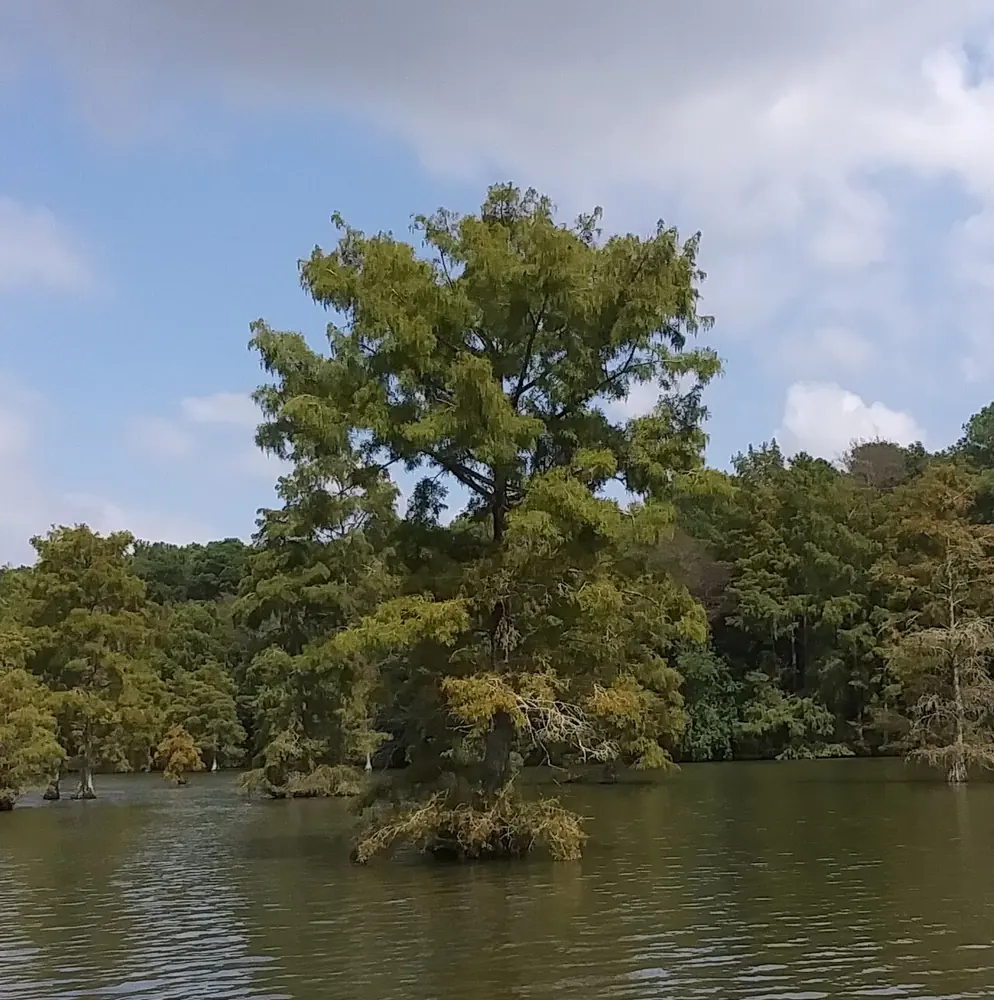
Bald cypress, sweetbay magnolia, red maple and dahoon holly are examples worth investigating for appropriate moist sites, but they differ greatly in mature size, form, light, salt tolerance and regional range. Treat them as research leads rather than a planting prescription.
Use UF/IFAS and the Florida Native Plant Society database to verify the exact species, Pinellas County occurrence, site moisture and mature dimensions. Then confirm current local rules, underground utilities and whether drainage work requires separate review.
See the pressure locally
Connect this guide to a St. Petersburg field note.
Primary sources and further reading
- Pinellas County - Green infrastructure and rain gardens
- UF/IFAS - Florida-Friendly Landscaping Pattern Book
- UF/IFAS - Trees for South Florida site conditions
- Florida Native Plant Society - Plant database
Use these resources to verify species details and current local guidance for your site.
Keep planning