Inspect before deciding what to cut
Walk around the tree from several angles and look for dead or hanging branches, cracks, cavities, weak unions, recent changes in lean and disturbed soil near major roots. Also map the targets below: the home, parked cars, sidewalks, play areas and utility lines.
A visual walk-through is a screening step, not a structural diagnosis. When a large tree has uncertain defects or can strike people or property, use a qualified arborist rather than turning a general checklist into a do-it-yourself risk conclusion.
- Look up for broken, dead or crossing branches
- Look at branch unions for cracks or included bark
- Look down for root damage, excavation or lifting soil
- Keep people away from hanging limbs and contact the utility for line conflicts
Favor structure, not topping
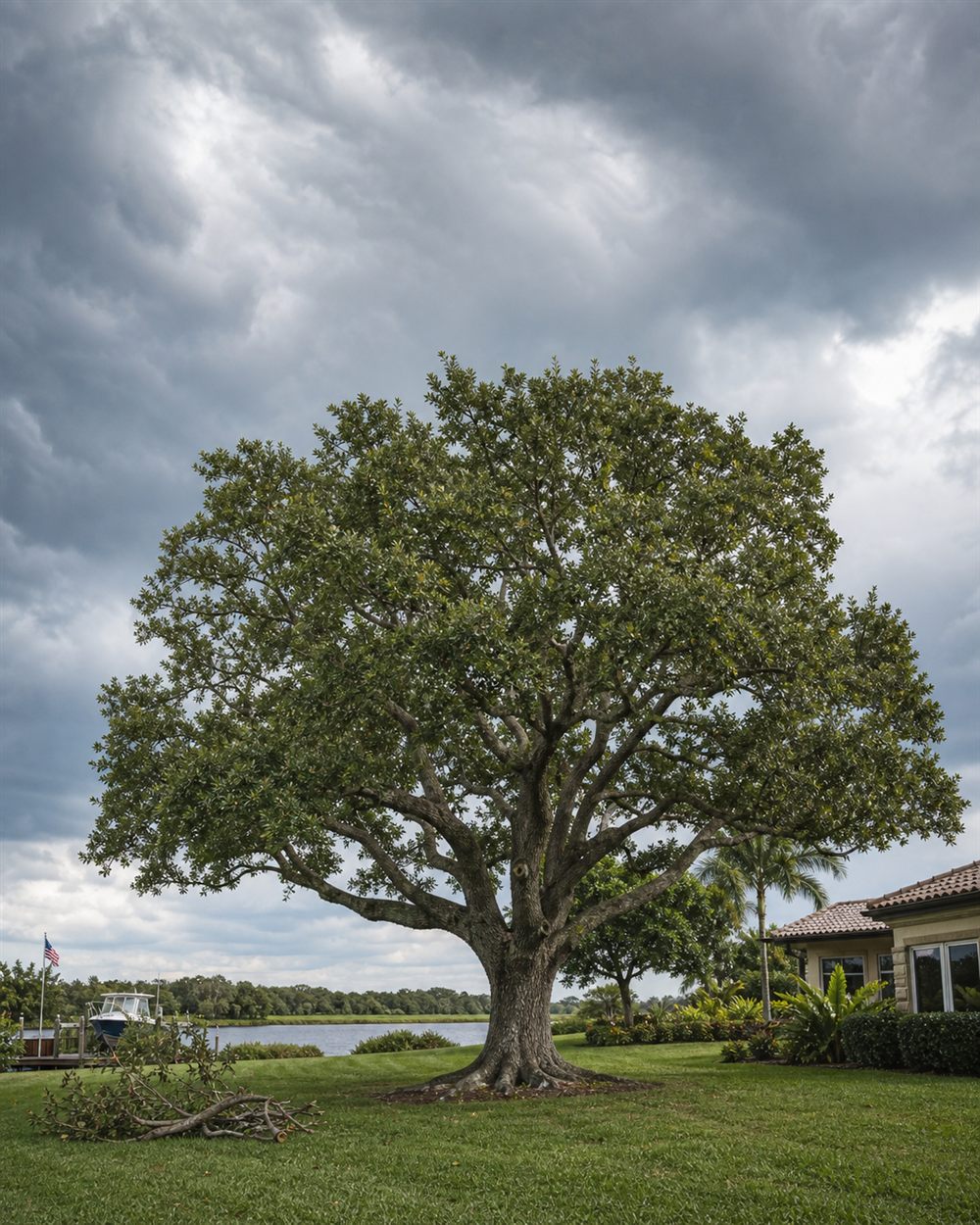
UF/IFAS hurricane research links good structure and preventive pruning with better wind performance, while warning that topping and large indiscriminate cuts can increase future weakness and decay. The objective is a balanced crown with well-distributed branches, not a suddenly thinned or flat-topped silhouette.
Young trees offer the best opportunity to guide branch spacing and reduce stems that compete with a main trunk. On mature trees, pruning dose and cut size matter. Removing too much live canopy at once can add stress instead of resilience.
Separate routine care from urgent hazards
Routine structural work should be planned well before a storm is approaching. A forecast cone is not the time to start major canopy work, leave fresh debris outside or hire an unverified crew under pressure.
After a storm, treat downed wires, suspended limbs and shifted root plates as hazards. Document the condition from a safe distance, keep the area clear and use the power company or an appropriately qualified tree professional. Restoration pruning is different from ordinary pruning and may require staged work over time.
See the pressure locally
Connect this guide to a St. Petersburg field note.
Primary sources and further reading
- UF/IFAS - Wind and Trees: Lessons Learned from Hurricanes
- UF/IFAS - Pruning and maintaining trees
- UF/IFAS - Restoring trees after a hurricane
- UF/IFAS - Landscape contractor and pruning guidance
Use these resources to verify species details and current local guidance for your site.
Keep planning